
How to use sales reports to make better decisions in your restaurant
29 September 2026
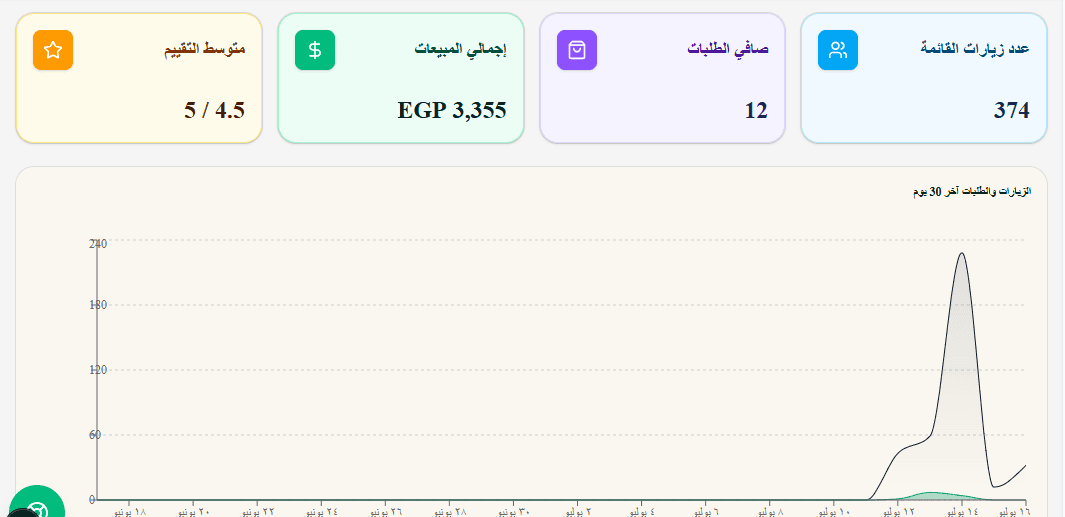
Most restaurant owners manage by instinct: "today was good" or "this week is slow". Instinct matters, but it is late. A number tells you what is happening today so you can act today, not after it shows up in the monthly books.
Number one: average order value
Take the sales of the day and divide by the number of orders. This tells you whether your customers order a single dish or a full meal. If it is low, the fix is not more customers but bigger orders from the same customers: a drink suggested with every meal, a photographed side next to the mains, or an "add a dessert at a discount" offer.
Track it weekly after every menu change. If you add photos to your sides and the average goes up, you have found a real lever.
Number two: best sellers (and worst)
Your top ten items usually make more than half of your sales. Make sure they are always available, well photographed and first in their categories. Then look at the bottom: items ordered fewer than five times a month cost you inventory, prep time and kitchen complexity. Either relaunch them with a better photo and description for one month, or remove them.
Number three: branch and time performance
If you run more than one branch, compare average order value and order count between them over the same period. A branch that sells far less with the same neighbourhood and menu points to an operations problem, not a demand problem. And the distribution of orders across the hours of the day tells you when you need an extra pair of hands and when you can run a lighter team.
The habit that makes the difference
Five minutes every morning: yesterday sales, average order, and the first item that ran out. Once a week: best and worst sellers, and one decision you act on immediately. You do not need an analyst or a spreadsheet, you need a dashboard that shows the right numbers and the habit of looking at it.